

11.03.2026
The identification of the remains of falle defenders and repatriation efforts are among the most complex and painful processes for both the families of those missing in action and specialists conducting search and identification operations. That is why, alongside interagency coordination, modern digital tools are of particular importance as they enable the processing of large volumes of data quickly, systematically and accurately.
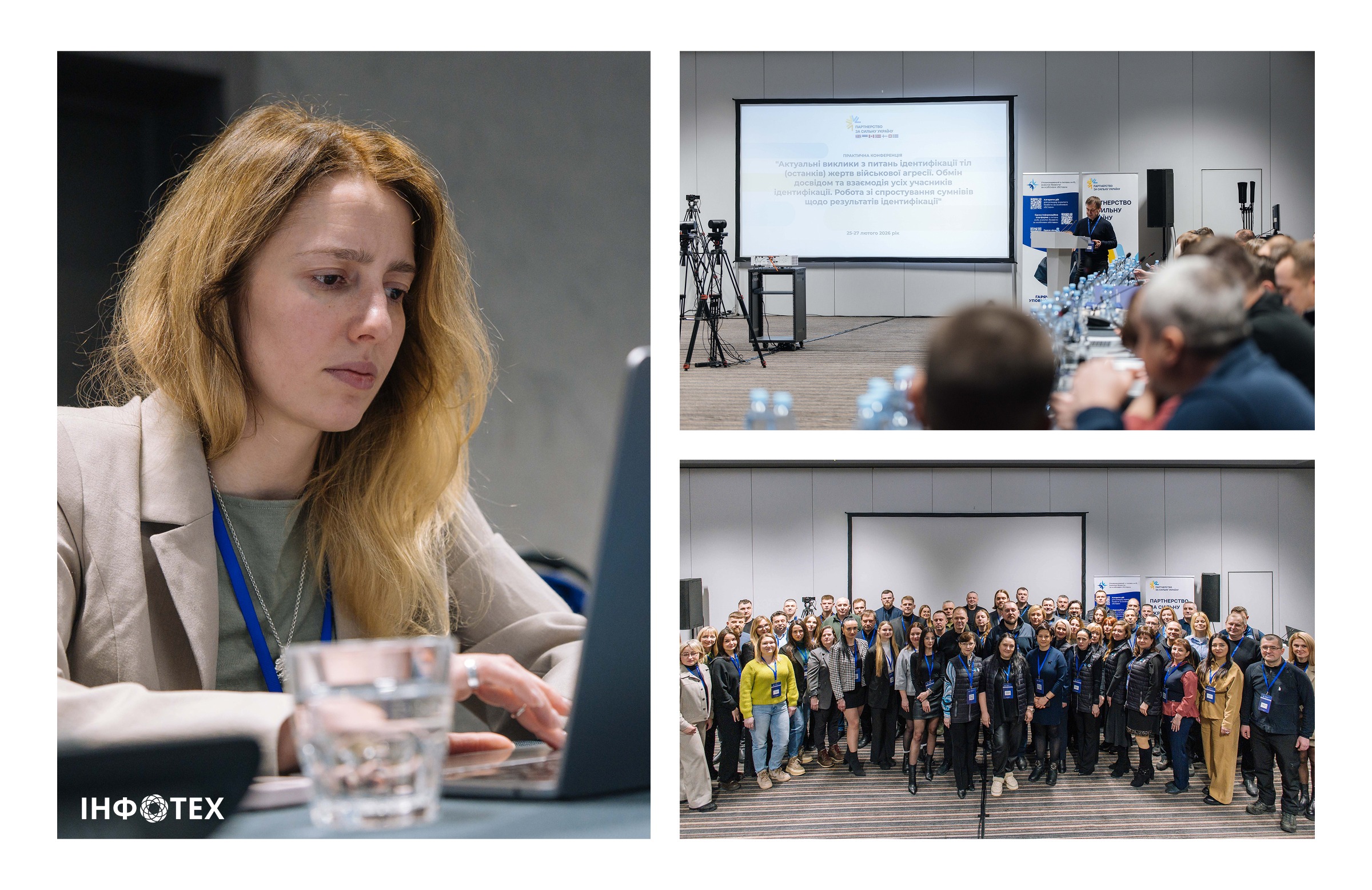
The event brought together key participants in the SE for the search and identification of the deceased – those who work directly with bodies evacuated from the battlefield and transferred as part of repatriation efforts.
During the conference, SE INFOTECH presented a new feature of the Unified Register of Persons Missing Under Special Circumstances (URPMSC) - the `Investigator`s Office`, designed to track unidentified individuals.
This tool transforms the complex and psychologically difficult process of identification into a structured data-processing algorithm. The feature enables searching and preliminary screening based on physical characteristics, personal items, clothing, tattoos and other attributes, allowing for the narrowest possible range of potential matches and minimizing the need to review irrelevant materials.
On behalf of the SE INFOTECH, the project was presented by project manager Natalia Sharipova, who demonstrated the approach to developing the system`s functionality and its practical capabilities. The presentation showed how investigators can work with information about unidentified bodies using advanced search and filtering tools. This significantly reduces data analysis time and makes the process more controlled and systematic.
Why this matters:
Process transformation. Instead of chaotically reviewing large amounts of material, investigators gain a tool for structured search and filtering based on objective data. Humanizing the identification process. Preliminary screening based on characteristics significantly reduces the psychological burden on the families of missing persons. Supporting the identification process. The system helps to fing potential ,atches faster and use them more effectively by working with reliable data received from National Police systems.
Our work on this feature is our contibitution to the national effort to locate individuals who have gone missing under unusual circumstances. We are grateful to our partners gor the opportunity to share practical experience and continue to improve the `Investigator`s Office` so that digital solutions can help more effectively identify the deceased and restore the names of those who gave their lives for Ukraine.

